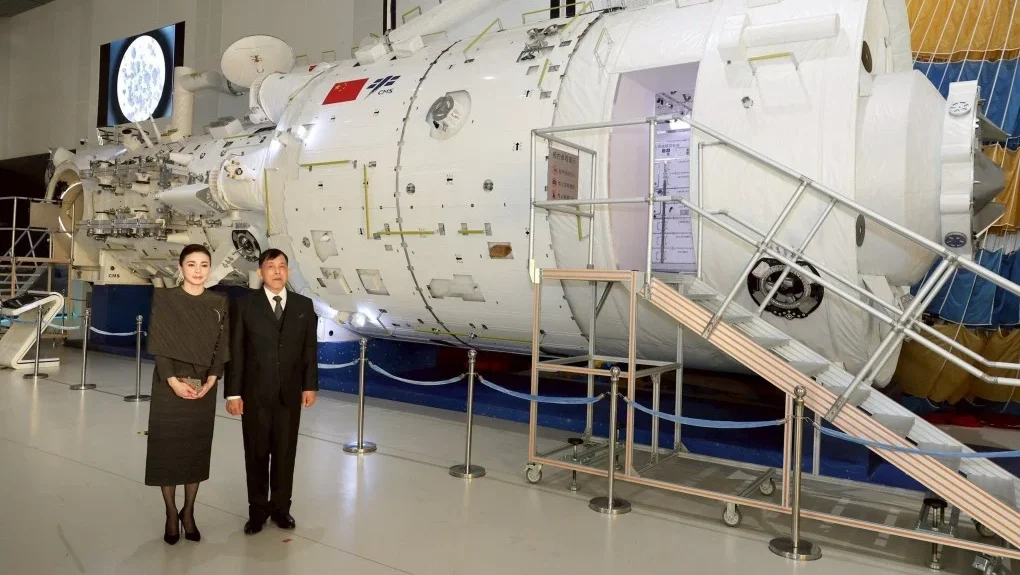
Beijing — In a moment steeped in history and symbolism, Thailand’s King Maha Vajiralongkorn and Queen Suthida became the first foreign heads of state to greet Chinese astronauts in orbit. The encounter, broadcast from the Tiangong space station to Beijing’s Aerospace Flight Control Centre, marked a milestone in both diplomacy and science.
The royal couple’s five‑day state visit was the first by a Thai monarch to mainland China in 800 years, coinciding with the 50th anniversary of modern diplomatic ties. Their presence at one of China’s most restricted facilities underscored trust and ambition, bridging centuries of distance with a gesture of unity.
For King Vajiralongkorn, a trained military pilot and aviation enthusiast, the exchange carried personal resonance. Smiling and waving at astronauts orbiting Earth, he embodied the spirit of exploration and partnership, reminding audiences that leadership is not only about governance but also about vision.
Thailand’s contribution to China’s upcoming Chang’e‑7 lunar mission — an instrument to study cosmic radiation and solar storms — further highlighted the collaborative nature of this visit. It was a statement that Southeast Asia is ready to participate in humanity’s next frontier.
Beyond science, the symbolism was profound. In an era of shifting alliances, Thailand’s engagement with China reflects a willingness to balance tradition and modernity, sovereignty and partnership. The king’s presence in Aerospace City was not just ceremonial; it was aspirational, signaling a future where nations rise together.
Ultimately, the visit was more than a diplomatic milestone. It was a narrative of renewal, resilience, and shared destiny. By greeting astronauts in orbit, Thailand’s monarch reminded the world that even across centuries, nations can rediscover each other — and in doing so, inspire generations to look upward, toward the stars.