
The Era of Total Transparency
Digitalization has fundamentally reshaped how society evaluates its leaders.
Today, the public can easily:
• Access professional track records
• Review media coverage
• Compare performance indicators
• Criticize openly across digital platforms
Transparency has created a new standard.
Leaders are no longer judged solely by their actions. They must be demonstrably credible and publicly acknowledged.
Recognition as a Tool of Legitimation
In public leadership theory, legitimacy generally takes three forms:
1️⃣ Legal legitimacy (formal authority)
2️⃣ Performance legitimacy (results and effectiveness)
3️⃣ Reputational legitimacy (recognized credibility)
Reputational legitimacy often reinforces the other two.
When a public official receives formal recognition for measurable contributions and performance, it strengthens public perception of integrity, competence, and accountability.
Recognition functions as a layer of validation within the broader governance ecosystem.
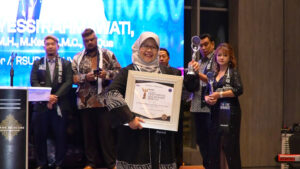
#1 Anugerah Prestasi Indonesia as a Symbol of Recognition
An official award sends a clear signal that:
• Performance has been evaluated
• Contributions have been acknowledged
• Achievements meet established standards
The symbolic elements—certificate of recognition, prestige frame, medal, official pin, and insignia—serve as tangible representations of that legitimacy.
In politics and governance, symbolism carries communicative power. It reinforces credibility in ways that statistics alone cannot.

Enhancing Policy Credibility
Leaders with strong reputational standing are more likely to gain public support for their policies.
Why?
Because citizens tend to trust figures whose track records have been formally acknowledged.
Official recognition strengthens the narrative of competence and accountability, reducing skepticism and increasing policy acceptance.
Public Trust as Political Capital
In modern democratic systems, trust is a primary form of political capital.
Public trust influences:
• Leadership stability
• Policy implementation
• Social support
• National reputation
Formal recognition contributes to trust-building by providing symbolic legitimacy—an affirmation that leadership performance has met objective standards.
Civil Service and a Culture of Achievement
Recognition also plays a critical role in shaping performance culture within government institutions.
When civil servants observe that innovation and measurable impact are formally acknowledged, it fosters:
• Motivation to excel
• Healthy professional competition
• Higher performance standards
A culture of recognition strengthens a culture of professionalism.
2026: The Era of Accountable Leadership
The year 2026 is expected to mark a heightened emphasis on public accountability.
Citizens increasingly demand:
• Transparency
• Integrity
• Measurable results
• Verifiable achievements
Within this framework, official awards function as part of a documented system of accomplishment—reinforcing accountability through structured recognition.
Recognition as a Historical Archive of Leadership
Leadership is not evaluated only in the present.
It is judged by history.
When achievements are documented through an official institution, they become part of a national reputation archive. And such archives shape leadership legacy.
Recognition transforms performance into historical record.
From Office to Honor
Positions may change.
Honor, once formally acknowledged, endures.
The #1 Anugerah Prestasi Indonesia provides a layer of distinction that transcends tenure. It becomes a symbol of contribution that remains recorded beyond the duration of office.
Conclusion: Modern Leadership Requires a Layer of Legitimation
In the contemporary era, authority cannot rely solely on formal structure.
It must be reinforced by recognition.
Through #1 Anugerah Prestasi Indonesia, Lembaga Penghargaan Indonesia serves as a legitimation layer within the national reputation system.
Because ultimately, strong leadership is not merely about holding power—
it is about being respected and recognized.